
Global Indices

Currencies, Crypto & Commodities


SA Indices
SA Upcoming Indicators & Dividends


*holding in a Finova portfolio
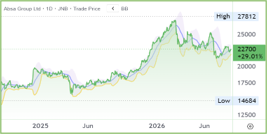
Absa (ABG) Interim Results for 6M Jun ’26 (22477c)
HEPS: 1545.4c (+7.9% from 1431.6c)
EPS: 1517.9c (+12.1% from 1354.1c)
Revenue: R58.8bn (+4.1% from R56.5bn)
Dividend: 850c per share (interim)
NAV: 20968c (+4.6% from 20048c)
Absa reported solid interim earnings with HEPS up 7.9% and EPS rising 12.1%. Revenue advanced 4.1% to R58.8bn, driven by 5% loan growth and deposits up 8%. Net interest margin compressed to 4.46% (vs 4.58%), while cost-to-income ratio increased to 53.4%. NAV per share rose 4.6% to 20968c. An interim dividend of 850c per share was declared, underscoring strong capital and liquidity. CEO Kenny Fihla highlighted Absa’s pan-African footprint and digital momentum, noting 14% growth in digitally active customers. Outlook remains constructive, with emphasis on sustainable development and regional expansion.
Comment: the moderate 7.9% increase HEPS disguised a marked divergence inasmuch as SA heps grew by a commendable 17% to R9.2bn whereas the Africa regions declined 10% to R3.6bn due to lower interest rates. The resultant 28% contribution to Headline Earnings is well below that of Standard Bank around 50%. The latter did better in West African regions (where Absa has very limited representation) than in its East African regions. The overall Credit loss ratio continued to improve from the 1H23 level of 127 to 94 closer to the through the cycle target band of 100 to 75. ROE improved somewhat to 15% albeit still well below Standard Bank at 19.8%. That said, however, the market has already differentiated between the peers and, on a FPE of 6.8x and DY of 7.6% plus seasoned ex-top Standard Bank executive, CEO Kenny Fihla, who knows what to do, the stock can safely be added to portfolios for yield and steady growth.

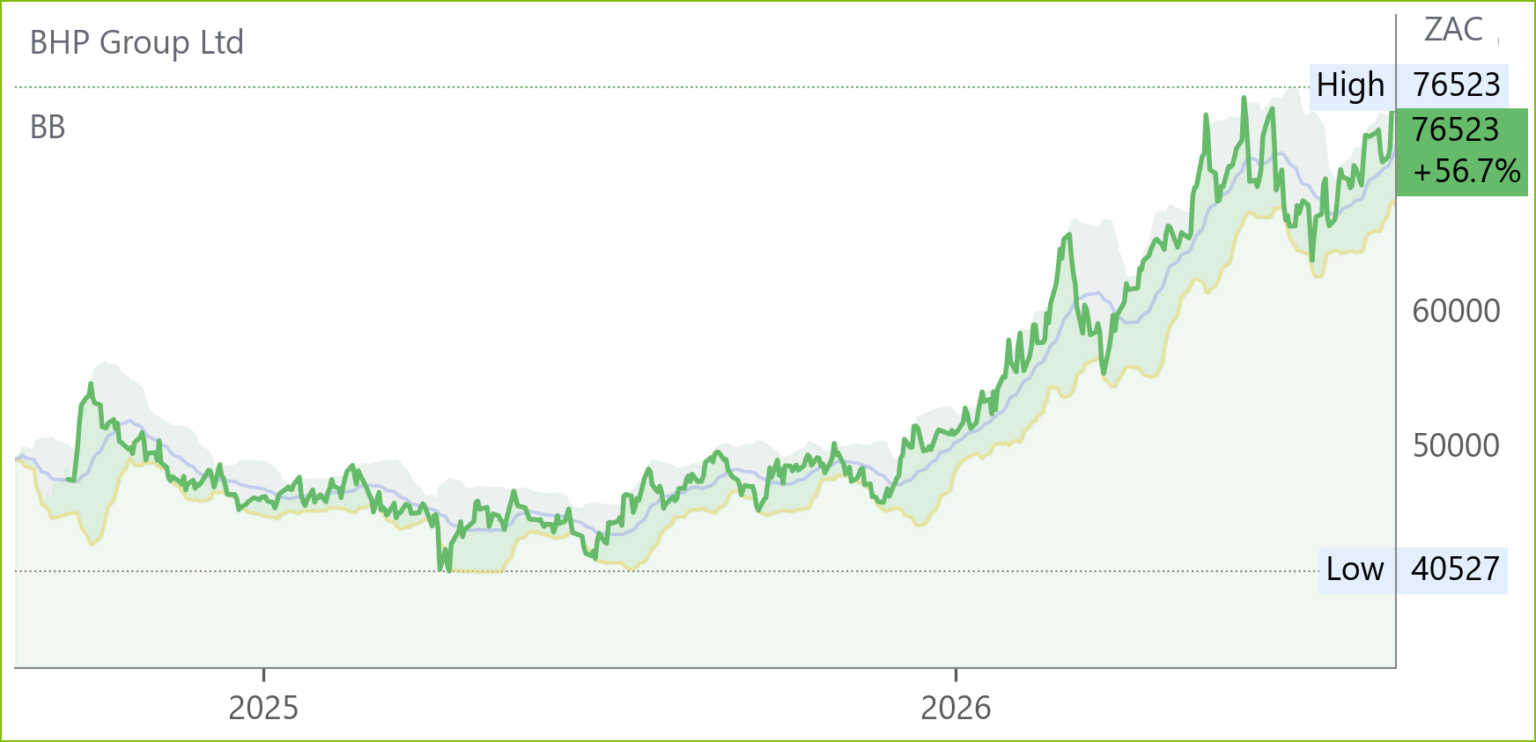
BHP* (BHG) Financial Results for FY26 (76523c)
HEPS: 239.1 USc (+31% from 182.4 USc)
EPS: 193.6 USc (+9% from 177.8 USc)
Revenue: US$58.76bn (+15% from US$51.26bn)
Dividend: 99 USc per share (final)
BHP delivered a strong FY26 performance, with headline earnings per share rising 31% to 239.1 USc and revenue climbing 15% to US$58.76bn. EPS increased 9% to 193.6 USc, reflecting robust demand across iron ore and copper operations. A final dividend of 99 USc per share was declared, fully franked for Australian tax purposes, marking a 65% uplift from the prior year. The Dividend Reinvestment Plan remains in place, with allocations due by 8 Oct ’26. Management emphasised disciplined capital allocation and operational projects including Jansen potash and Spence recovery upgrades.
Comment: copper for the first time contibuted more than half of earnings with plans to boost production from around 2mt in FY26 to c. 2.7mt in FY 35 all of the capex for which will be funded by the copper division itself. The balance sheet remains robust with the debt: equity ratio at 48% and net debt of $9bn well below the $13bn level of FY25 .
Cash generation was particularly strong in FY2026, with free cash flow 83 per cent higher at US$9.8 billion. Underlying EBITDA was US$33 billion, up 27 % and at a margin of almost 60 per cent with the copper business at 70%. BHP has now produced an average margin of over 50 per cent for well over two decades. For a company that prides itself on most projects being mostly on time and within budget the massive Jansen (60 mtpa) potash project in Saskatchewan has taken some explanatory ink but is now set for initial production in mid-2027. So, while BHP is the copper producer in the world and potash will be major, iron ore emains vital with supplementary growth to come and management is confident that, notwithstanding recent noise around Chinese purchases of Australian iron ore, the longstanding relations between BHP and its Chinese customers remain very much on track. With the share price having soared some 49% since around R500 in early December the stock is on a 19.3x PE but management argues strongly in its results presentation that resources stocks are substantially undervalued compared to other global equities. This is after payments to governments globally reached US$12.4 billion in FY26. Our global adjusted corporate tax rate was 36.5 per cent. Once royalties are included, this increases to 42.9 per cent.

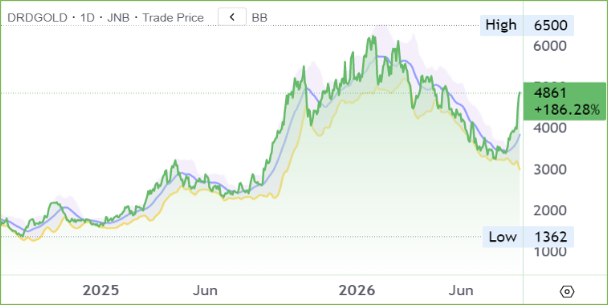
DRDGOLD (DRD) Financial Results for FY26 (4752c)
HEPS: 493.2c (+89% from 260.6c)
EPS: 493.4c (+89% from 260.1c)
Operating Profit: R3.12bn (+68% from R1.86bn)
Revenue: R11.16bn (+42% from R7.88bn)
EBITDA: R3.02bn (+67% from R1.81bn)
Dividend: 120c per share (final)
DRDGOLD delivered record FY26 results, with HEPS and EPS nearly doubling on the back of a 42% revenue surge to R11.16bn, driven by a 40% increase in the Rand gold price and stable production volumes of 155,577oz. Operating profit rose 68% to R3.12bn, while EBITDA climbed 67% to R3.02bn. Cash operating costs of R967,544/kg remained below forecast despite higher reagent and diesel inputs. A final dividend of 120c per share was declared, reflecting strong liquidity with cash holdings at R2.77bn and no debt. CEO Niël Pretorius emphasised disciplined cost control and progress on Vision 2028 projects, including commissioning of Daggafontein TSF and FWGR’s DP2 expansion. Comment: this is a gold producer investing heavily for growth in combined throughput from 215kt in to Vision 2028, a four-year, R10 billion capital investment designed to lift combined throughput at Ergo and FWGR from 2.15 million to 3 million tonnes a month, and to raise annual gold production toward approximately 6 tonnes (c. by 2028).

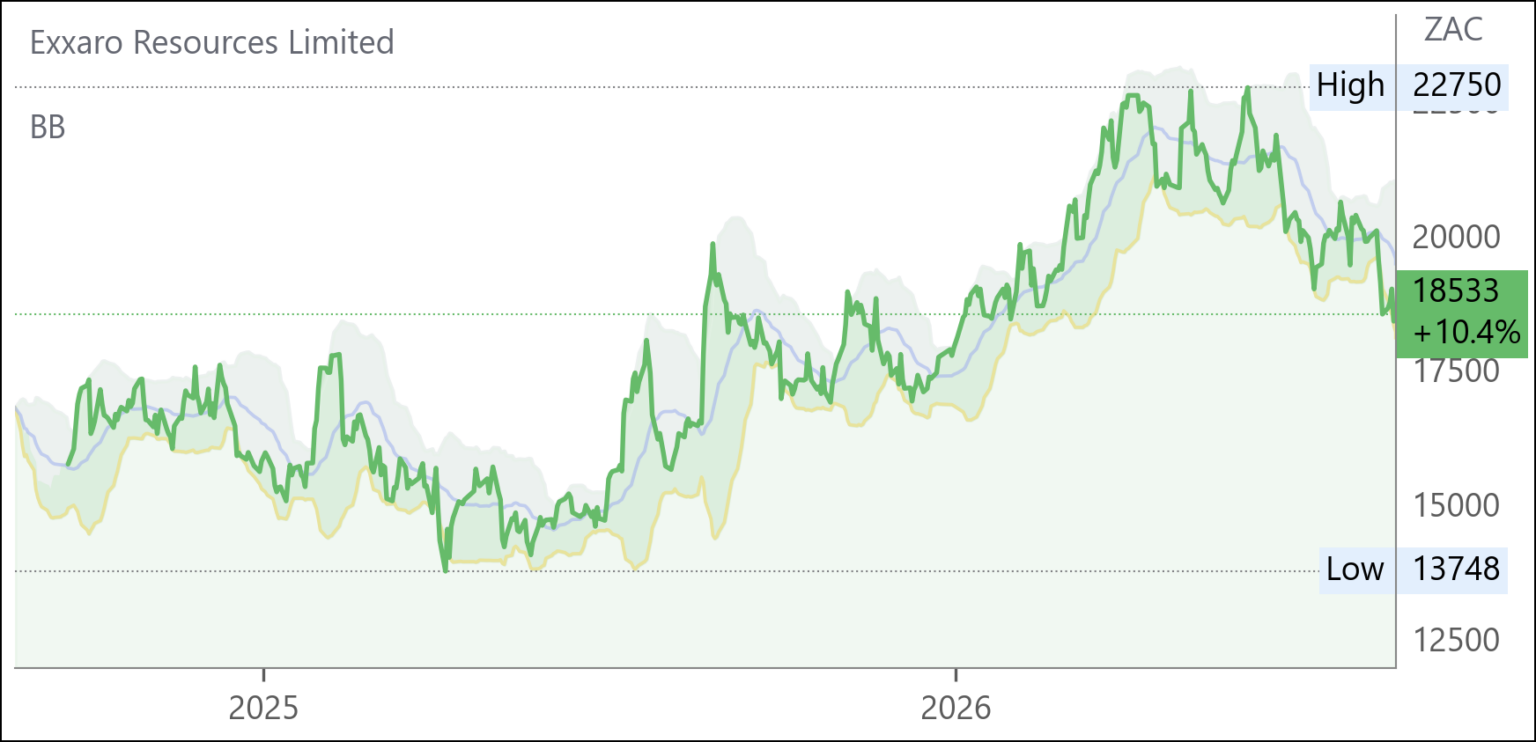
Exxaro* (EXX) Interim Results for 6M Jun ’26 (18533c)
HEPS: 1377c (−20% from 1724c)
EPS: 1395c (−19% from 1717c)
Operating Profit: R4.0bn (−2% from R4.1bn)
Revenue: R22.1bn (+7% from R20.6bn)
Dividend: 700c per share (interim, −17% from 843c)
Exxaro reported mixed interim results for the six months ended Jun ’26. Revenue rose 7% to R22.1bn, supported by stable coal volumes and higher realised prices, but earnings contracted as cost inflation and weaker energy contributions weighed on margins. HEPS fell 20% to 1377c, while EPS dropped 19% to 1395c. Net operating profit eased 2% to R4.0bn. An interim dividend of 700c per share was declared, payable on 5 Oct ’26, reflecting a 17% reduction from the prior year. Chairman Mvuleni Geoff Qhena reaffirmed Exxaro’s commitment to capital discipline and energy diversification, while CEO B Magara highlighted ongoing investment in renewable projects and digital mining initiatives. Outlook remains cautious given commodity price volatility, but management expects operational resilience to underpin long-term growth.
Comment: Diesel cost inflation was a major factor in dampening the bottom line for Exxaro this period. For any company that operates in open pit mining and logistics, is going to suffer when fuel prices rise. The Waterberg rail line is operating below 50% capacity, with 3-4 trains currently leaving per week, but CEO Ben Magara guided the goal is to reach 7 and maximise capacity through rail, which has at least a 2.5x benefit on profitability over road logisitcs, but gave no indication as to when this would occur.
Positiveiy, the group is now 4 years fatality free, with LTIFR down 60% to 0.02, and Manganese operations LTIFR down 52%. The ramp up of renewable energy generation and the groups goal (although very far away) of carbon neutrality by 2050 reflect Exxaro’s attitude towards ESG and the priority of safety for their staff, while other major miners like Sibanye and Implats have had a heavy year with fatalities. Exxaro continue to pay a dividend in line with their new dividend policy of 40-67% of group earnings. With diesel inflation impact out of their control due to the ongoing war, and a potentially lengthy road to full Waterberg rail capacity, Exxaro can be held for existing shareholders to collect a healthy dividend.
Thungela Resources* (TGA) Interim Results for 6M Jun ’26 (11804c)
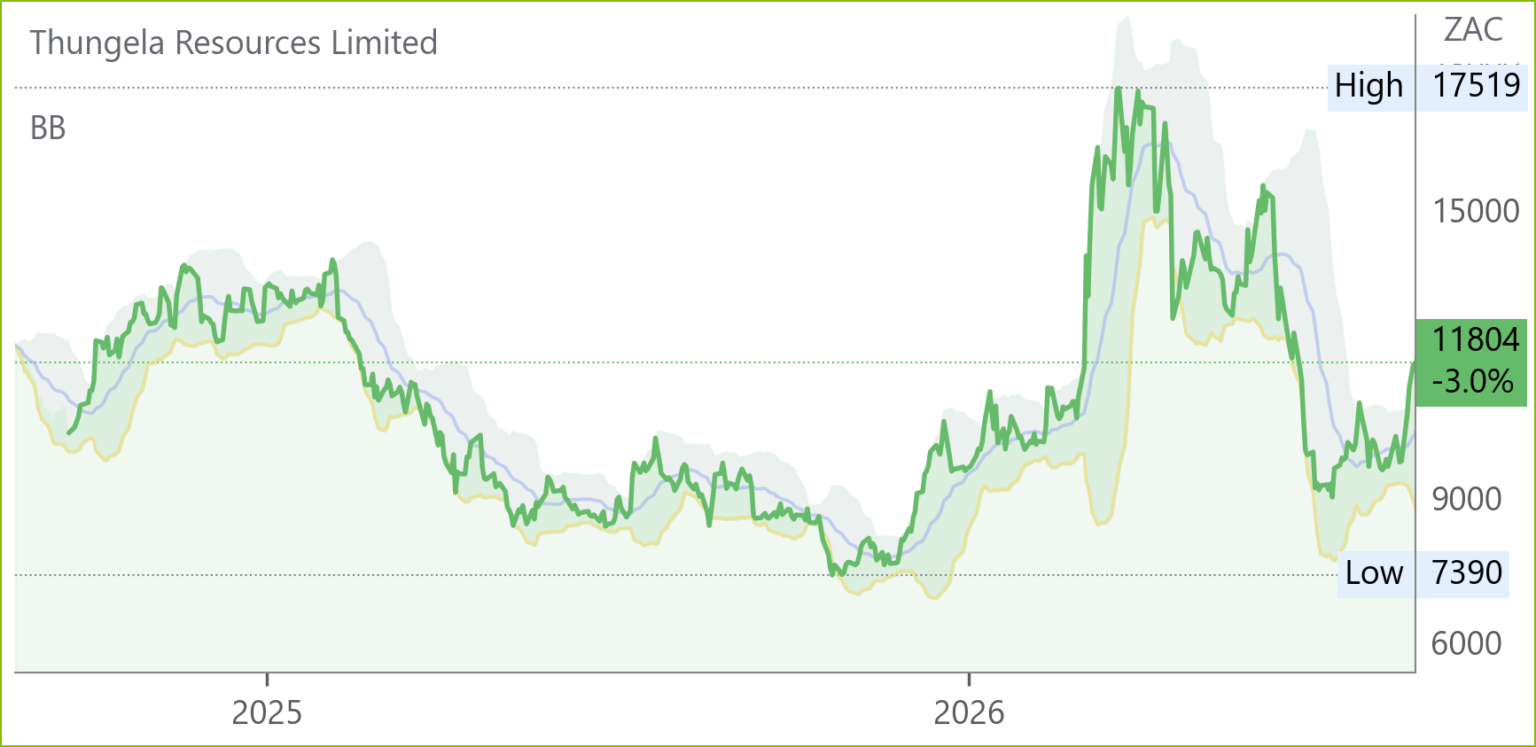
HEPS: 480c (↑150% from 192c)
EPS: 1095c (↑467% from 193c)
Revenue: R15.2bn (↑2% from R14.8bn)
EBITDA: R1.3bn (↑91% from R691m)
Dividend: 550c interim (↑175% from 200c)
Export saleable production rose 6% to 8.5Mt, with sales up 7% to 8.9Mt. Net profit surged to R1.4bn, supported by stronger coal prices in South Africa and Australia, though rand strength offset some gains. Adjusted operating free cash flow reached R1.9bn, aided by R1.1bn from FX derivatives. CEO Moses Madondo emphasised resilience, citing “a solid foundation of operational excellence, financial discipline and consistent value delivery.” Projects at Zibulo North and Annea Colliery were delivered on time and within budget, while disposals reduced environmental liabilities by R1.1bn. Interim dividend declared at R5.50 per share. Thungela’s disciplined execution, stronger coal prices, and improved rail logistics drove a marked earnings recovery, underpinning robust shareholder returns and maintained guidance.
Comment: the gradual improvement in Transnet export coal performance and dependable production outlook provides a favourable opportunity for investors with a positive view on the outlook for the international coal price. “The Group remains confident in the long-term fundamentals of coal. Coal remains an affordable, accessible and reliable source of energy for many economies, particularly in developing regions where energy demand continues to grow. Against a backdrop of increasing energy security concerns, grid stability requirements and the slower-
than-expected pace of renewable energy deployment, coal is expected to remain an important part of the global energy mix for decades to come, supporting economic development, industrial activity and reliable electricity supply.

Copper 360 (CPR) Financial Results FY26 (54c)

HEPS: -27.36c (↓19.1% from -33.82c)
EPS: -27.87c (↓38.9% from -45.65c)
Revenue: R143.2m (↓0.4% from R143.7m)
Revenue was broadly flat, but audit adjustments linked to recapitalisation and debt restructuring increased total losses to R366.8m. IFRIC 19 required shares issued to creditors to be measured at 64c rather than 52.62c, creating a non‑cash loss of R112.8m. Additional adjustments included R54.1m in intangible assets from reacquired royalty rights and R3.5m amortisation. Despite higher aggregate losses, per‑share metrics improved due to dilution. No dividend was declared. Management emphasised that these changes are accounting in nature, with no impact on cash resources, liquidity or operations.
Comment: The market loved the appointment of Neal Froneman, former Sibanye CEO, and sharply rallied off the back of the news +14% on the day. However, one man can’t fix things overnight. The company has a large portion of long term debt maturing in the upcoming 12 months. A quick ratio of 0.4 and current ratio of 1.36 pointed to a current asset of R206m pertaining to preacquisition funding costs for Nama Copper, which management suggests may be in jeopardy, which remains a risk going forward and needs monitoring. However, we are confident Froneman will take the necessary steps to realising the value of this promising project.

Spur (SUR) Financial Results for FY26 (4481c)
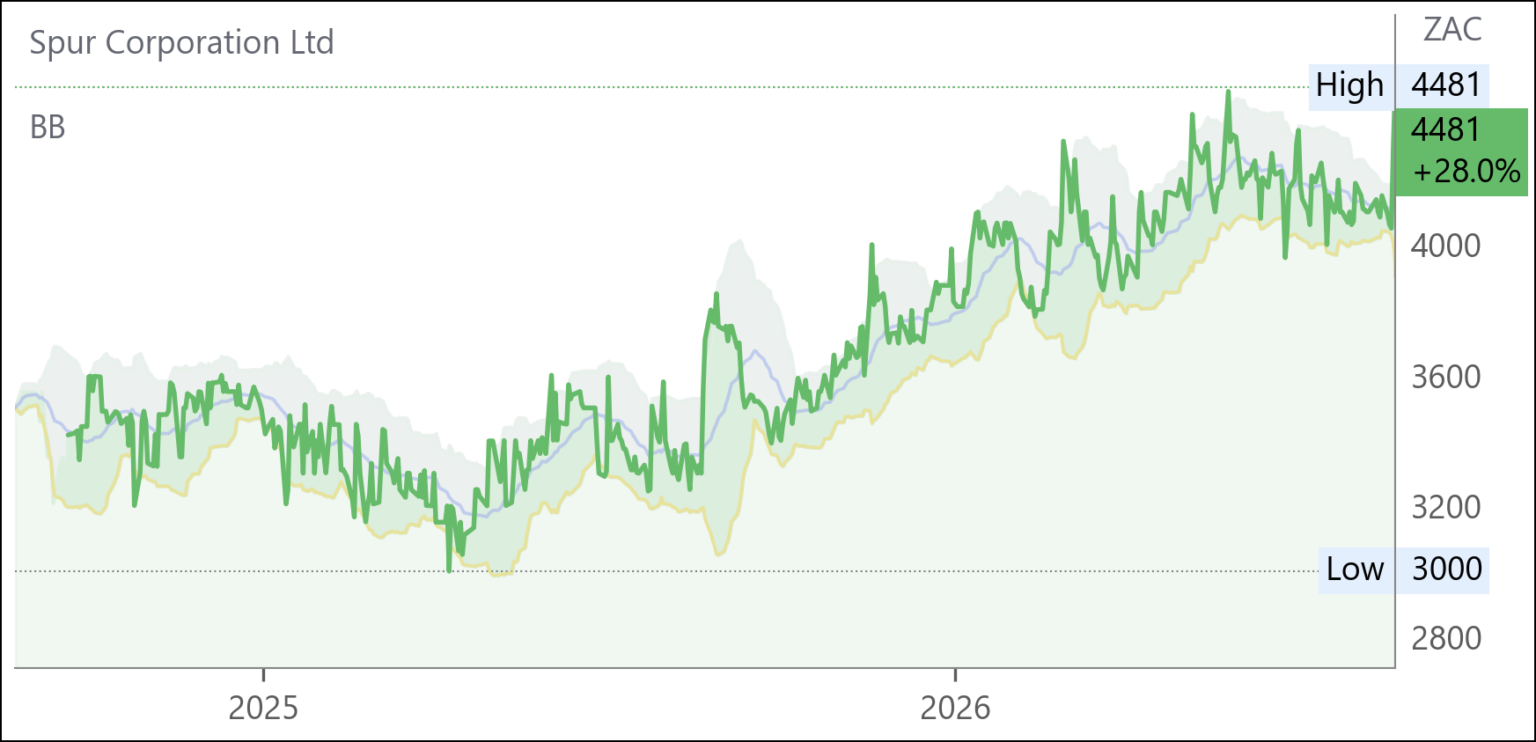
HEPS: 209.3c (−38.4% from 339.9c)
EPS: 215.7c (−36.1% from 337.5c)
Operating Profit: R323.6m (−19.4% from R401.7m)
Revenue: R4.19bn (+8.5% from R3.86bn)
Dividend: 326c per share (final, +9%)
Spur reported FY26 results marked by strong revenue growth of 8.5% to R4.19bn, supported by a 6.9% rise in franchised restaurant sales and expansion to 751 outlets across 14 countries. However, HEPS fell 38.4% to 209.3c and EPS dropped 36.1% to 215.7c due to a R129.5m provision for the GPS litigation claim, which significantly reduced reported earnings despite underlying trading strength. Operating profit declined 19.4% to R323.6m. A final dividend of 326c per share was declared, up 9% year-on-year, reflecting robust cash generation (R493.8m unrestricted cash). CEO Val Nichas emphasised brand innovation and digital engagement as key growth drivers. Spur plans to open 50 new restaurants in South Africa and 16 internationally in FY27.

NEPI Rockcastle (NRP) Interim Results for 6M Jun ’26 (14736c)

HEPS: 27.07 euroc (+2.1% from 26.52 euroc)
EPS: 42.01 euroc (+7.3% from 39.15 euroc)
Revenue (Net rental & related income): €317.7m (+3.8% from €306.0m)
Dividend: 28.93 euroc per share (interim)
NAV: €8.4bn portfolio value (+€126m uplift)
LTV: 33.1% (+0.3pp from 32.8%)
NEPI Rockcastle delivered steady growth in H1 ’26, with net rental income up 3.8% to €317.7m and distributable earnings per share rising 3.5% to 32.14 euroc. EPS advanced 7.3% to 42.01 euroc, while HEPS increased 2.1%. Occupancy remained high at 98.2%, supported by 2.7% tenant sales growth and a 3.3% rise in basket spend. The portfolio value rose €126m to €8.4bn, aided by renewable energy output up 38%. A dividend of 28.93 euroc per share was declared, maintaining a 90% payout ratio. Outlook guidance lifted to 3.5–4% DEPS growth for FY26.
Comment: NEPI Rockcastle is the leading player in CEE, and their proactive strategy of managing their retail book is impressive. They boast a 99% collection rate and 98% occupancy rate. Their new expansion into Bilbao in Spain is particularly interesting. CEO Marek Noetzel highlighted the unique geographical location of the MegaPark is in an area with a high catchment area of over 1 million people, and due to the mountainous region behind, the ocean in front, and the sheer size of the new mega park, it is going to be tough to compete with. NEPI’s strategy with tenant placement and relationships drives their success. They focus on consumer trends and close relationships with their tenants to understand where to best place and reallocate outlets. This is evident in the growth in Health & Beauty and Fashion Compliments retail regments, which grew by 8.4% and 6.9% respectively, while Furnishing & DIY and Sporting Goods fell -5.5% and -5.4% respectively. This intentional shift by management and reflects their strategy of value creation. Importantly, NEPI will apply a REIT regime from Jan 2027, which will allow them to benefit from lower tax rates in certain operating jurisdictions. Management’s proactive strategy has already proven its track record, and another increase in declared interim dividend means NEPI has deserves a place in a portfolio short of real estate exposure.

South Ocean (SOH) Interim Results for 6M Jun ’26 (94c)
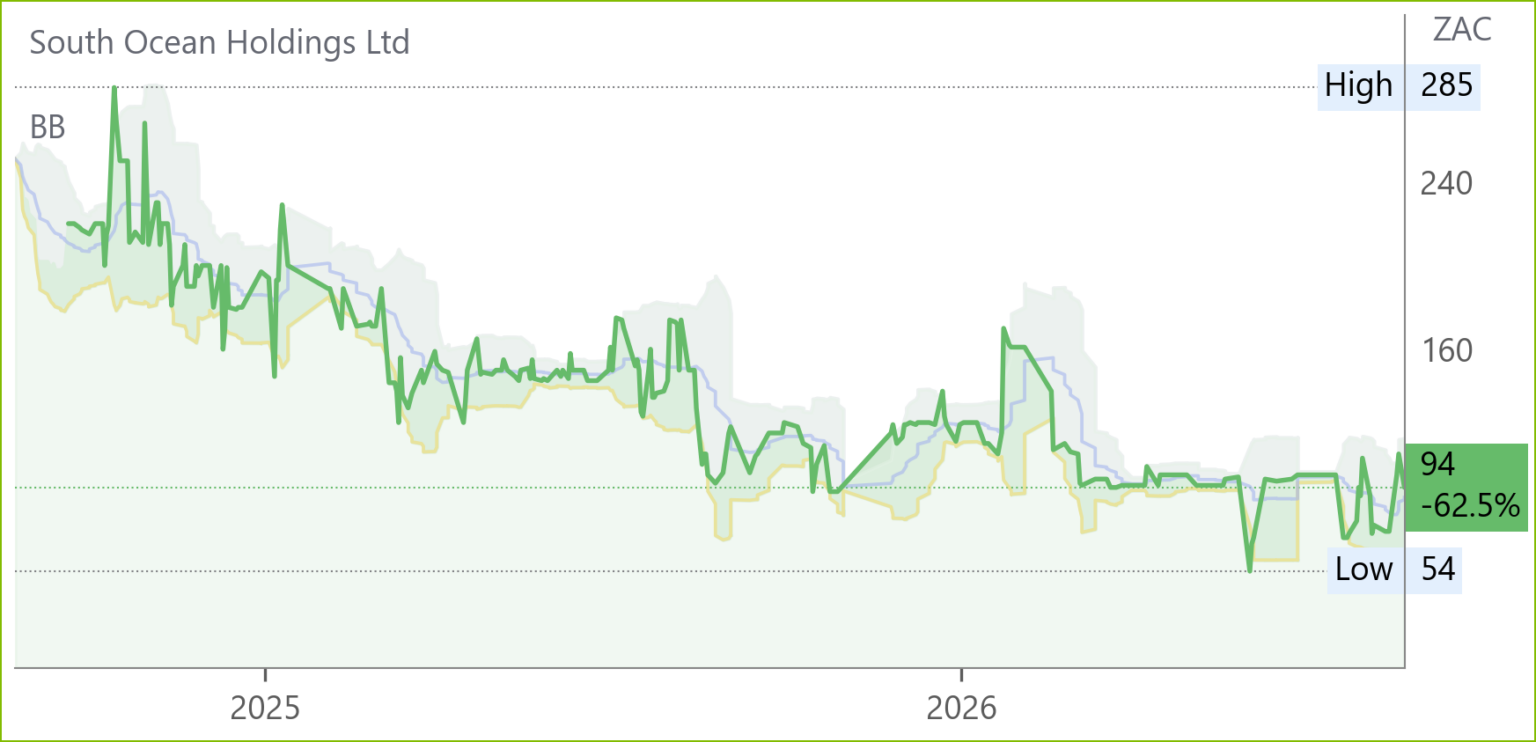
HEPS: 8.02c (+186.1% from −9.31c)
EPS: 8.02c (+186.1% from −9.31c)
Operating Profit: R30.1m (+195.2% from −R31.6m)
Revenue: R1.53bn (+30.1% from R1.18bn)
NAV: 327.6c (+4.1% from 314.8c)
South Ocean Holdings returned to profitability in H1 ’26, with HEPS and EPS rising sharply to 8.02c from a prior loss of 9.31c. Revenue grew 30.1% to R1.53bn, driven by stronger demand in electrical cables and conduit. Operating profit recovered to R30.1m from a loss of R31.6m, reflecting improved trading conditions and cost discipline. NAV per share increased 4.1% to 327.6c. No interim dividend was declared in line with policy, with distributions considered at year-end. CEO A Smith highlighted stabilisation in core markets and ongoing investment in associate businesses serving electrical wire and cable outlets. Outlook remains cautiously positive, supported by infrastructure demand.

Trading Statements & Updates
RCL Foods (RCL) Trading Statement FY26 (777c)
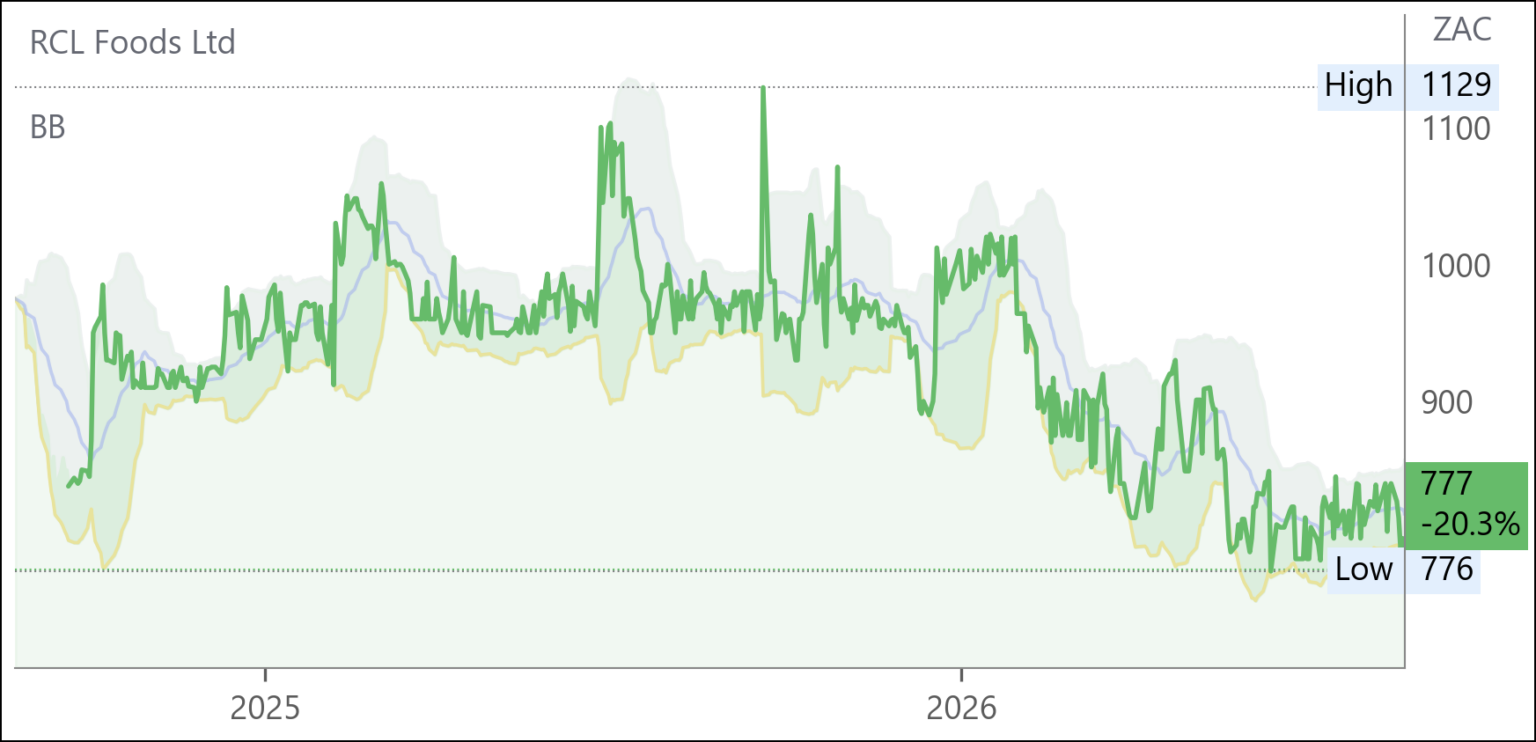
HEPS: 101.6c–109.4c (↓30–35% from 156.3c)
EPS: 81.0c–90.1c (↓50–55% from 180.1c)
EPS contracted sharply due to a R20.3c per share impairment of goodwill and brands in Sunshine, following weaker volumes after labour disruption at Durban in Dec ’24. Underlying HEPS fell 25–30% to 102.3c–109.6c, driven by losses in Sugar and associate Royal Eswatini Sugar, impacted by deep‑sea imports, ineffective tariff protection, and a 22.6% decline in global raw sugar prices. Pet Food volumes dropped 20.5% due to food‑safety disruptions and stock write‑offs. Culinary and Baking delivered resilient performances despite volume pressure. Results due 31 Aug ’26.

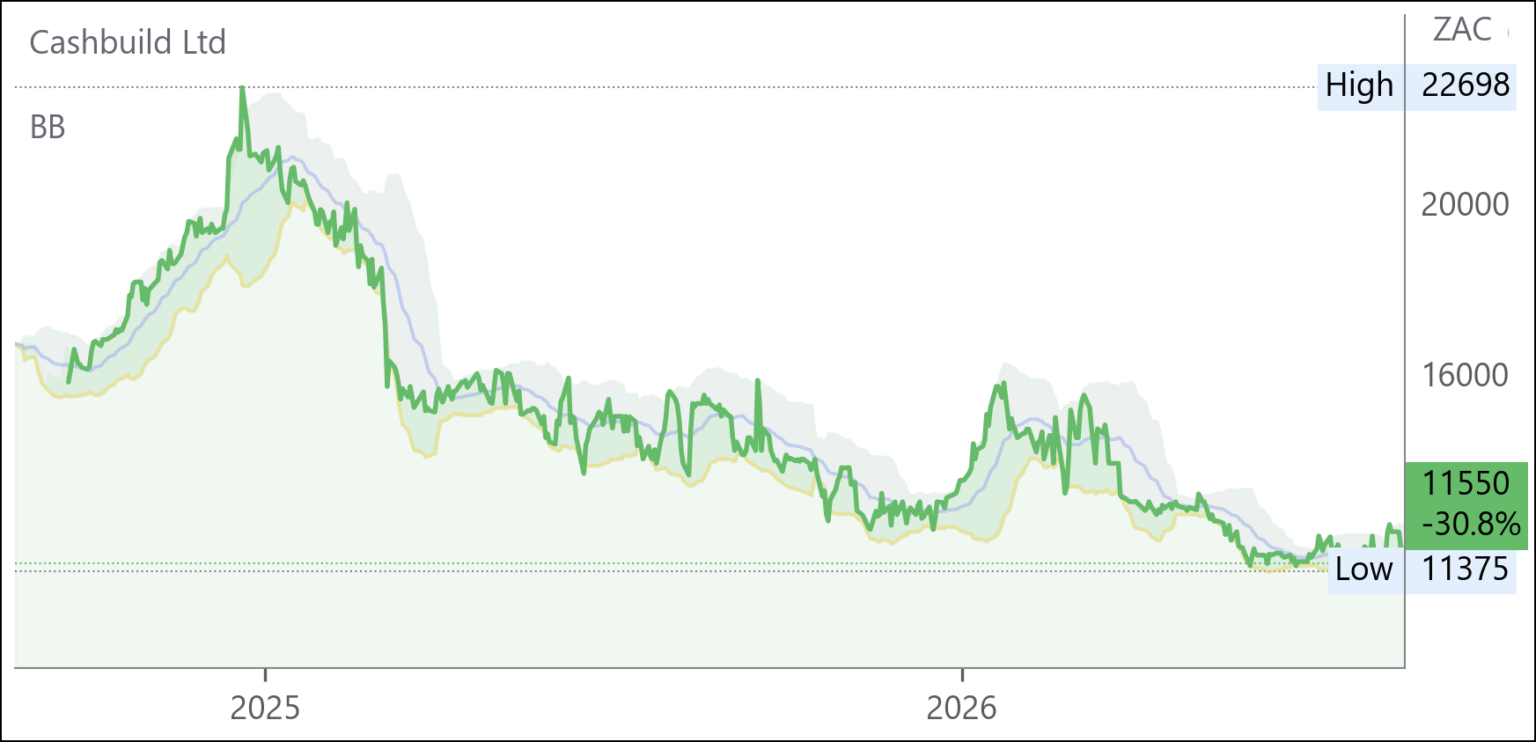
Cashbuild (CSB) Trading Statement FY26 (11550c)
HEPS: 939.1c–991.1c (−5% to −10% from 1040.4c)
EPS: 765.2c–817.4c (−22% to −27% from 1042.5c)
Cashbuild anticipates softer FY26 earnings, with headline earnings per share expected to decline 5–10% and EPS down 22–27%. The sharper EPS contraction reflects the disposal of its Malawi subsidiary, which created a once-off loss. Trading conditions remained challenging, with muted consumer demand and inflationary pressures on building materials. Management noted ongoing cost containment initiatives and store refurbishments aimed at improving customer experience. Cashbuild continues to focus on its core South African market, while maintaining a cautious approach to regional expansion. Results due on 2 Sep ’26.

Snippets
SPAR (SPP) announced the resignations of Chairman Mike Bosman and Deputy Chair Dr Shirley Zinn, effective 17 Aug ’26. Bosman strengthened governance and continuity during a challenging period, while Zinn advanced remuneration reform and inclusion. Lwazi Koyana has been appointed Interim Chairman, with the Nominations Committee leading succession. The Board reaffirmed support for CEO Reeza Isaacs and its turnaround strategy remains intact.
Moderna (MRNA.O) and Merck’s late-stage trial of personalized mRNA cancer vaccine Intismeran, combined with Keytruda, cut melanoma recurrence and spread, marking the first positive late-stage mRNA cancer vaccine result. Shares surged 160%, adding nearly $40 billion to Moderna’s market cap, while Merck rose 12%. Analysts see potential annual melanoma sales of ~$3B by 2035. Regulatory approval could come as early as next year, though manufacturing scalability remains a hurdle. The breakthrough signals a new era in solid-tumour immunotherapy.